
Professional cleaning today is no longer defined by effort alone. It is defined by process, inspection, documentation, and adherence to recognized standards. As materials become more complex and customer expectations continue to rise, the role of standards such as the IICRC S300, S100, S220, and S800 has become central to how we protect ourselves, our clients, and our businesses.
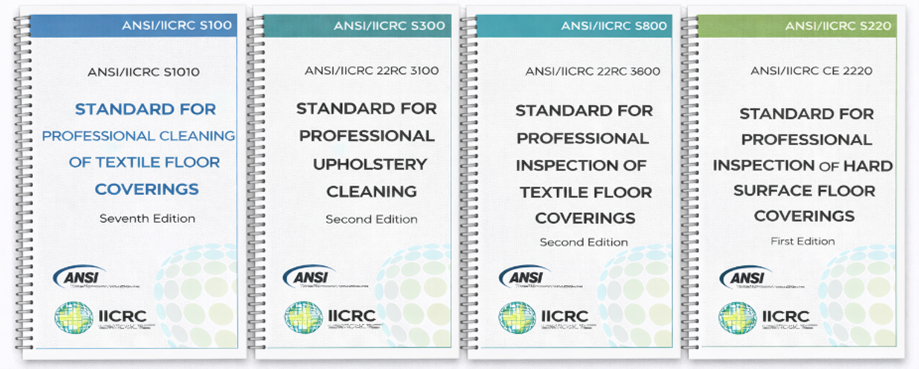
Inspection is the foundation of professional service. The ANSI/IICRC S800 Standard and Reference Guide for Professional Inspection of Textile Floorcovering establishes inspection as a structured process, not a formality. Identifying fiber type, construction, pre-existing conditions, and potential risks before cleaning reduces liability and supports informed decision-making.
Inspection is the foundation of professional service. The ANSI/IICRC S800 Standard and Reference Guide for Professional Inspection of Textile Floorcovering establishes inspection as a structured process, not a formality. Identifying fiber type, construction, pre-existing conditions, and potential risks before cleaning reduces liability and supports informed decision-making.
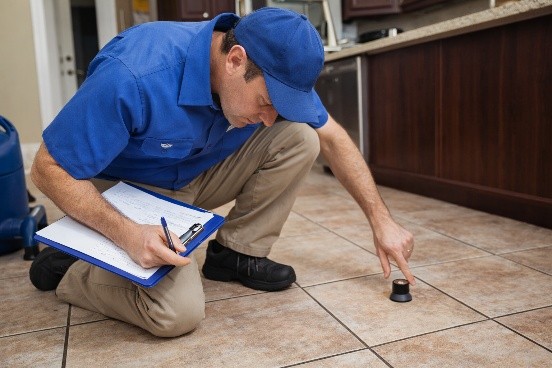
The same approach applies to hard surfaces. The ANSI/IICRC S220 Standard for Professional Inspection of Hard Surface Floor Coverings emphasizes evaluating wear, finishes, installation issues, and prior maintenance. Cleaning methods must be selected based on these findings, not habit or convenience.
For carpeted surfaces, the IICRC S100 Standard for Professional Cleaning of Textile Floor Coverings reinforces that professional cleaning is a controlled process. Fiber identification, soil type, chemistry selection, agitation, and moisture control must align with the material and conditions present.
Upholstery cleaning requires even greater control. The IICRC S300 Standard and Reference Guide for Professional Upholstery Cleaning highlights the risks associated with mixed fibers, delicate backings, and complex construction. Proper inspection and moisture management are critical to preventing shrinkage, color loss, and distortion.
Across all standards, one principle remains consistent: professional cleaning is risk management. Clear communication of inspection findings, limitations, and expectations is essential before work begins. Standards provide the framework that allows cleaners to explain decisions with confidence and consistency.

Across all standards, one principle remains consistent: professional cleaning is risk management. Clear communication of inspection findings, limitations, and expectations is essential before work begins. Standards provide the framework that allows cleaners to explain decisions with confidence and consistency.